
Franklin County Criminal Docket Searches
For circuit and associate criminal matters alike, Missouri Case.net is the best first stop. It lets you search by litigant name or filing date. You can also search by case number, or by scheduled hearings and trials. An exact case number works fastest. With only a name, narrow the results by county, court, or date. Open a file only after that. Keep in mind that a criminal docket records court events, not police reports or jail rosters.
- Open Case.net and select the search mode that fits the information already known.
- Limit the search to Franklin County or the applicable court when the interface offers that choice.
- Open the matching case header and confirm the case number, division, filing date, and parties.
- Read the docket entries in date order, then check any listed hearing or trial setting.
- Save the exact case number and document date before requesting a copy from the clerk.
A public case in the Franklin County criminal docket may return the case header, docket text, public parties and attorneys, and a scheduled event. Not every historical filing makes it online, though. When you ask for criminal records, keep the request narrow. A focused request works better than a broad one.
Franklin County Criminal Docket Delays
Case.net is a practical starting point. But the Franklin County detention page warns it may not update right away after court. That gap matters after a hearing or when a status question is urgent. Verify time-sensitive details with the court that has jurisdiction. Or ask the Franklin County Circuit Clerk, rather than trusting a fresh search result.
Custody and docket status answer different questions. One person can have more than one court case. And a docket judgment says nothing about current custody. Read the court record for filings, settings, orders, and disposition. The detention channel is separate.
Franklin County’s detention information spells out the Case.net lag warning. That lag can slow a criminal court docket search.
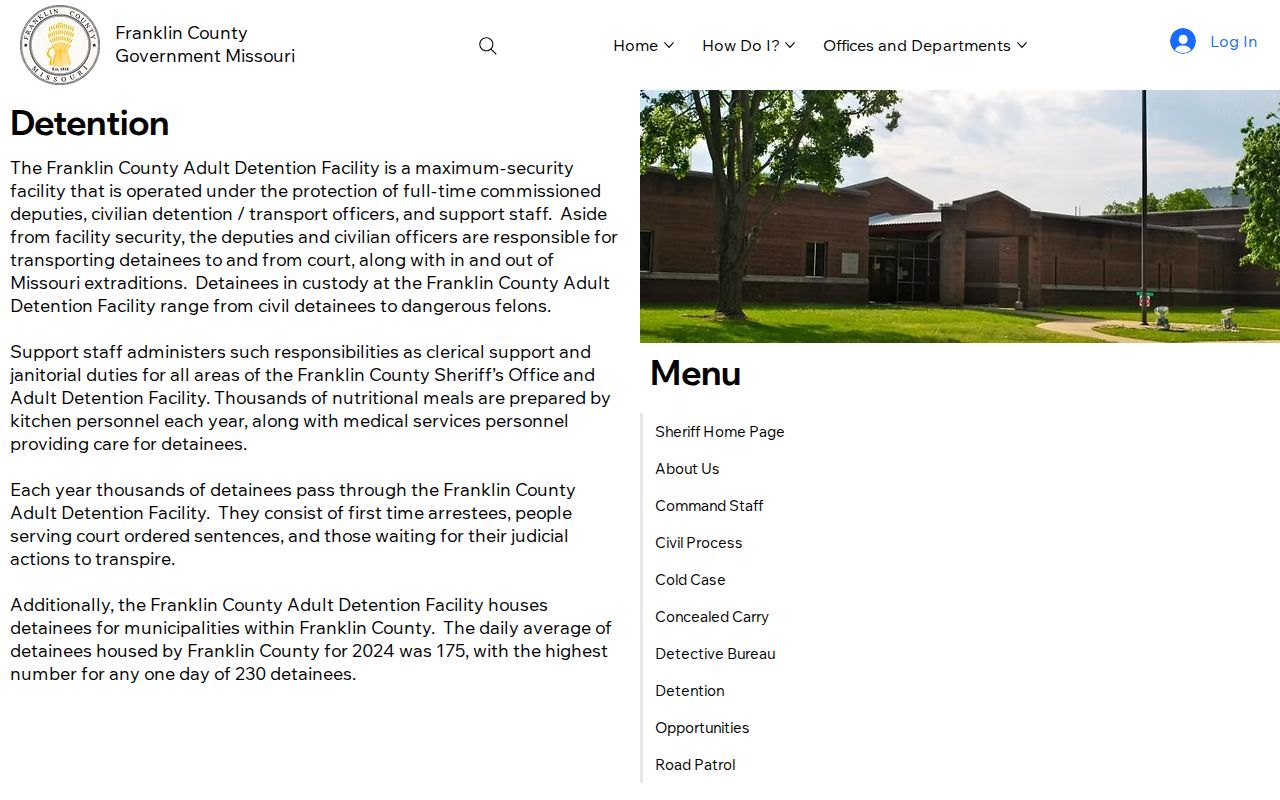
Treat the warning as a prompt to verify a recent court event. It is not proof a case or hearing is missing.
Criminal Dockets: What They Show
A Franklin County criminal docket usually opens with a case header. It then moves through dated events. Under Missouri Court Operating Rule 4, the filed documents and the docket or backer sheet form the official court record. The header identifies the court, county, division, case type, filing date, parties, and counsel where public. Later entries may show a complaint or information, a warrant or summons, arraignment, or motions. You might also see a setting, a verdict, judgment, sentencing, payment, or an appeal.
| Case number | Use the exact number displayed by Case.net. Older and newer Missouri case-number structures can coexist. |
|---|---|
| Case header | Identifies the court, division, case type, filing date, parties, and status where public. |
| Docket entry | A dated court event, filing, setting, action, or notation in chronological order. |
| Setting | A scheduled court event. It is not, by itself, a final outcome. |
| Disposition | What happened to the matter, confirmed by the relevant judgment or order. |
Read the whole sequence before concluding anything. A charge, a scheduled setting, and a final judgment are three different docket events.
Franklin County Criminal Department Access
The Franklin County Circuit Clerk keeps the docket for circuit and associate criminal cases. Its Criminal Department answers at (636) 583-7365. For copies, certifications, and record questions a public Case.net result cannot settle, use the clerk’s official court page.
Before calling, gather the case number, exact document title, filing date, and certification choice. The request form needs the document and filing-date pair, not a general description. Copies run $1 per page. Certification adds $1.50. The clerk gives an estimated total before prepayment.
Note: The Circuit Clerk maintains the criminal court docket and filed court records. The separately elected Franklin County Clerk does not.
Criminal Case Stages on the Docket
Criminal cases rarely run on one timetable. Still, the docket entries tend to trace a familiar path: a charging document, warrant or summons, arraignment, plea, discovery, motions, pretrial settings, trial activity, judgment, sentence, supervision, payment, and appeal. An entry may show an event was set or continued. That alone does not mean the case is finished.
Docket flow: Filing → Arraignment → Pretrial → Plea or Trial → Disposition → Sentencing
Missouri’s Court Operating Rule 4 backs the state’s automated docket framework. To confirm an outcome, rely on a later judgment or sentencing order.
Franklin County Criminal Docket Documents
Docket text and the document behind it are different things. Per the Missouri Courts’ File Viewer information, a hyperlinked docket entry means an attached document you can open. An entry without a link may have no document attached. Or the public user may lack access. The label “(ECASE)” marks an electronic case record.
Remote access also has a time boundary. Under the 20th Circuit remote-access schedule, documents filed on or after July 1, 2023 became remotely accessible after circuit activation. Older material sits at a courthouse public-access terminal. So a missing online image does not mean the court has no file.
If a link you need is absent, note the document title and date from the docket. Then ask the clerk about the courthouse terminal or a copy request. Never try to bypass a confidential or sealed designation.
Franklin County Criminal Docket Courts
Criminal charges in Franklin County travel through a layered court system. The main trial court is the Circuit Court of the 20th Judicial Circuit. Its circuit and associate circuit divisions handle the state-court criminal docket. Municipal divisions sit below them. Ordinance and traffic cases start there. A municipal matter can climb into associate or circuit processing when the rules call for it. Check the Case.net header before you trust any result. The header names the court and division. That answer tells you whom to call next. Franklin County Municipal Court, a city municipal court, the Circuit Clerk, and the county jail are all separate channels. Federal criminal cases live outside Case.net entirely. So match your question to the office that holds the record.
Franklin County Criminal Docket and Custody
The Franklin County jail keeps its own numbers. They say nothing about any criminal case. Detention staff counted an average of 175 detainees per day in 2024. The peak was 230 on a single day. Those are operational counts. They are not case totals, and they tell you nothing about how a docket ended. The jail page itself sends case-status questions to the Circuit Clerk. That office is where the Franklin County criminal docket lives.
So work from the docket entry itself. Match the court number, division, and setting, then watch for a later judgment or order. A person may be confined through a separate custody process. That record sits somewhere else entirely. Keeping the two straight keeps you from mistaking a partial status for a final result.
Access Rules for Criminal Dockets
Access to a Franklin County criminal docket comes with real limits. Court Operating Rule 4.02 sets a display rule. Access equipment must show records in a legible form. Rule 4.03 goes further. It names the filed documents plus the docket and backer sheets as the official court record. Still, a public case header does not unlock every attachment. Confidential records, sealed records, expunged records, juvenile matters, protected identifiers, and certain closed records get separate treatment. Each one answers to separate access rules of its own.
Key rules:
Court Operating Rule 4.24 controls confidential court-record categories.
RSMo § 610.120 limits general-public access to closed records.
RSMo § 610.140 describes expungement procedure and confidentiality.
Bring photo identification if you plan to view confidential cases. A request to inspect confidential material may also need a judge's approval. So ask the clerk about access authority. Do not assume a blank result means no court event ever occurred. Where does public docket access end? Missouri's closed-record statute spells out the line between that and unrestricted access to every record.
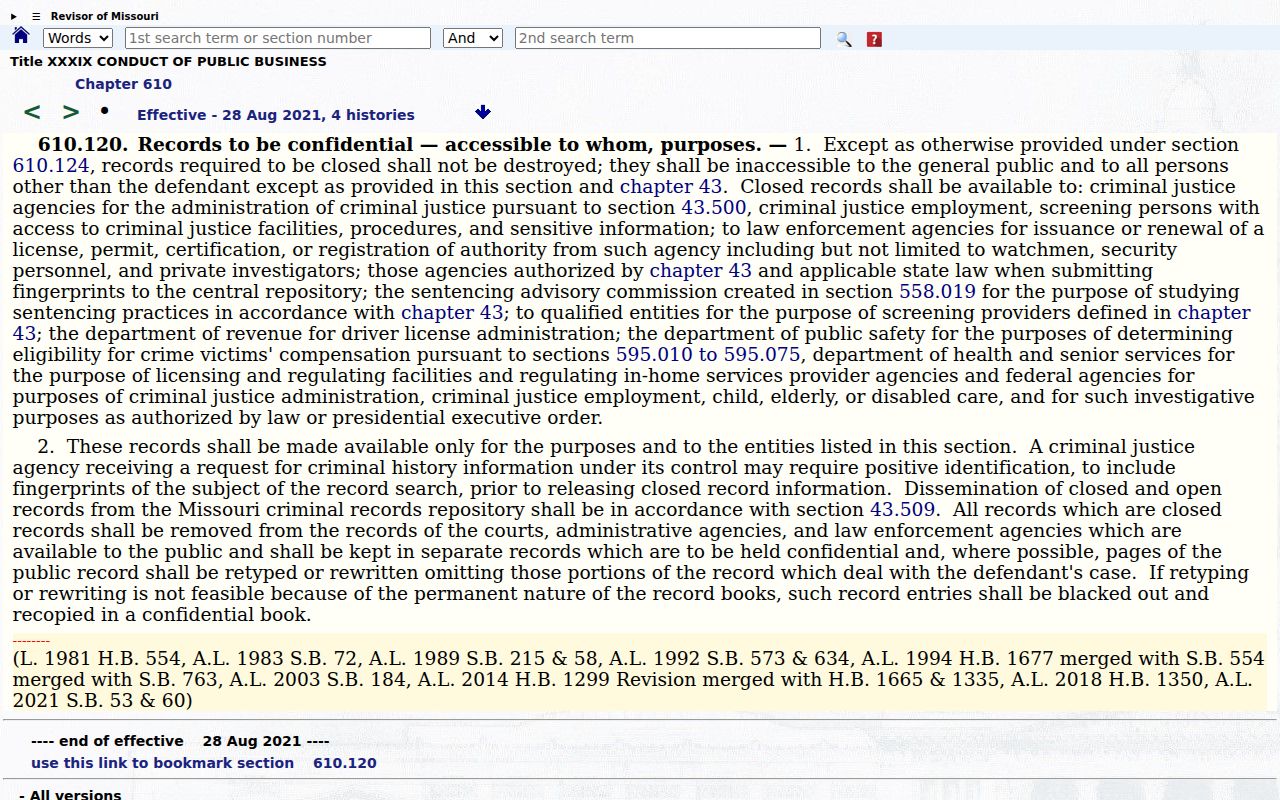
Closed-record rules can still bar a single document or index even when the rest of the court information stays public.
Franklin County Criminal Docket File Access
You have three ways to reach a Franklin County criminal docket file. Case.net handles the public search, and File Viewer sometimes shows a linked document. The courthouse terminal covers older electronic material. The Circuit Clerk takes a named copy request. What you choose depends on what you need. It could be a docket entry, a public image, or a certified copy. It could be word on whether a restricted record can be opened at all.
An expunged case will not surface in a routine name search. Missouri's expungement statute lays out a petition, notice, hearing, order, and confidentiality rules. If a case seems hidden, save the exact Case.net information you can still see. Then ask what step the clerk or court allows.
For an ordinary open-file copy, give the clerk real specifics. Include the case number, the document title, the filing date, whether you want certification, and pickup or mail. Those details match the Franklin County form. They also help when many entries sit on one criminal docket. The clerk pulls the right court record instead of guessing. The official expungement source explains the law. A case record like that no longer has ordinary public availability.
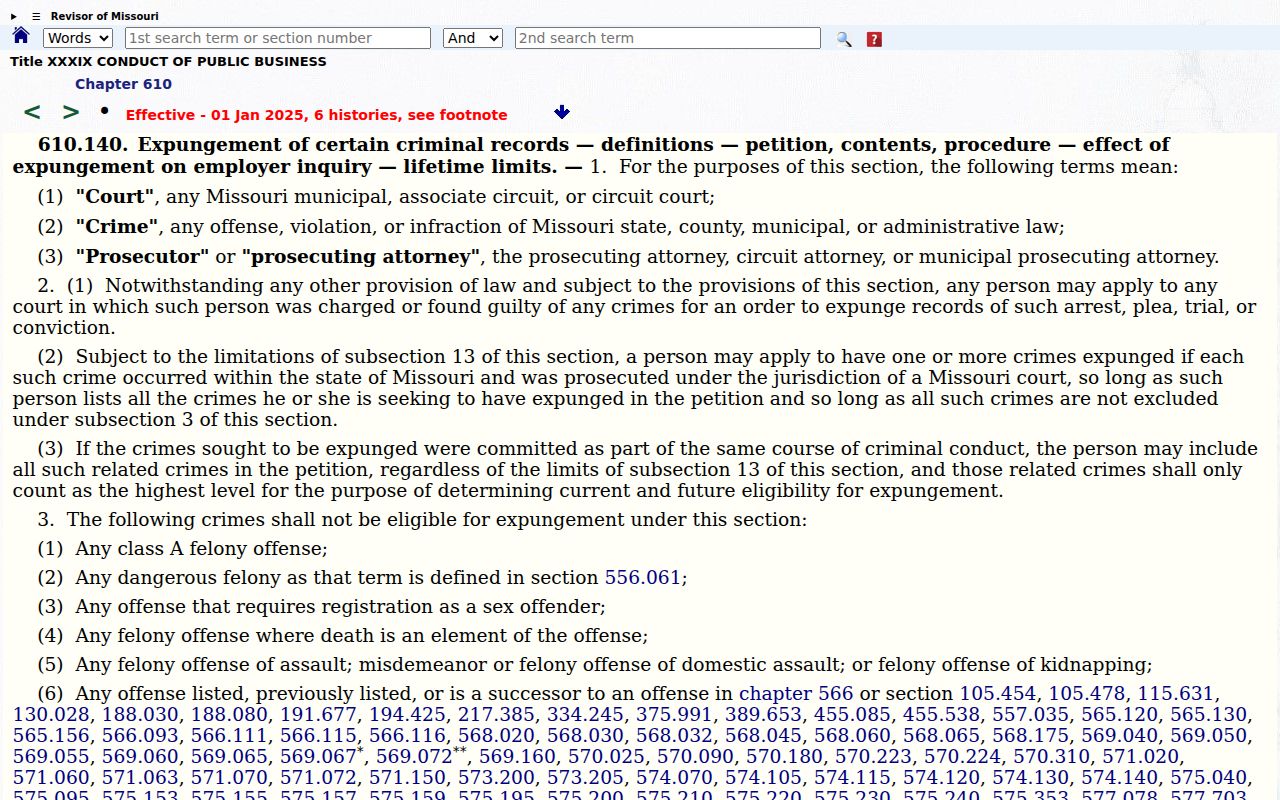
Expungement: the rule closes access to the court record; it does not create some other public lookup path.